
Blogs
Top 10 Most Common Surgical Instruments
Jan
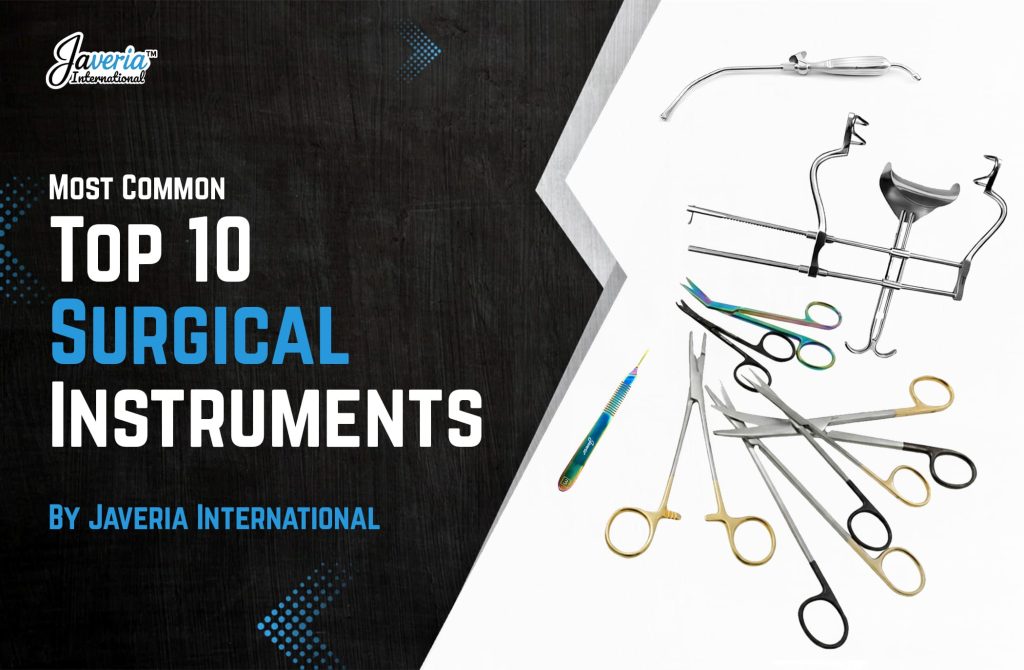
Top 10 Most Common Surgical Instruments and Their Functions
The surgical instruments used in an operation are crucial for the success of the technique. Regardless of how minor the procedure is or how complex the surgery is going to be, having the correct surgical instruments will provide a level of precision, safety, and effectiveness to the surgical procedure. Healthcare professionals, hospitals, and purchasers of medical equipment must understand the major commonly used surgical tools and how they function. This blog by Javeria International contains a complete guide of the ten most frequently utilized surgical instruments and also describes how they function so that you can make informed decisions when purchasing or using surgical instruments.
1. Scalpel
A scalpel is one of the most fundamental surgical tools and is used to create very precise incisions in the skin or other tissues. Uses for Scalpels Include:
- Making clean and precise incisions
- Dissecting tissues during the surgical procedure
Scalpels are manufactured as either reusable or disposable devices and are made primarily from high-quality German stainless steel materials so that blade remains sharp for years after use.
2. Forceps
Handheld surgical instruments used for grasping, holding or manipulating tissues or other materials will be referred to as forceps in surgical procedures. Forceps can have multiple uses while in surgery including:
The ability to hold and secure certain types of tissue or to manipulate sterile instruments in the course of a procedure to unplug small items or debris.
Forceps come in many different types and there are many examples including:
Each type of forceps is made with a particular purpose/use during the course of a surgical procedure therefore forceps come in many different models/styles.
Hemostatic Instruments are applied to clamp blood flow in a part of the body under surgery as a means to prevent bleeding. Their main purposes are applied during surgical operations of:
- Clotting a blood vessel
- Controlling blood loss
- Securing tissue throughout a surgical operation
Hemostatic instruments are in three primarily different forms, namely:
- Kelly hemostatic instruments
- Mosquito hemostatic instruments (also known as Clamps)
- Crile hemostatic tools
In the operating room the use of color coated hemostatic instrument has gained popularity of late due to their convenience and a way of sorting and locating the instrument.
4. Scissors
Surgical scissors are convenient to use in cutting the tissue, sutures or any other surgical equipment.
Their primary uses include:
- Cutting tissue
- Cutting sutures
- Capable of splitting up really sensitive material.
There are two fundamental examples of surgical scissors, including:
- Mayo scissors, used to cut body tissues that are thicker.
- Metzenbaum scissors, which are commonly used in delicate
The all-purpose scissors are the metzenbaum scissors that are used in the more delicate surgeries.
Needle holders are one of the most important tools used to hold and guide the suture needle while performing suturing techniques.
Their primary uses include:
- Securing suturing needles
- Assisting in closing a wound
Needle holders are also designed with a locking mechanism and a textured handle to ensure that the needle holder remains stable during the suturing process, allowing for accuracy.
6. Retractors
Retractors are instruments designed to hold back tissues or organs to improve visibility and allow access to the surgical site. The primary functions of retractors include exposing the surgical site and holding an incision open. Retractors may be manual or self-retaining, depending upon the complexity of the surgery being performed.
7. Clamps
Clamps are surgical instruments utilized to compress tissue or blood vessels and control the flow of blood or fluids. The primary functions of clamps include occluding blood vessels, holding tissue in place and preventing the leakage of blood or fluid. Surgical clamps are commonly used in cardiovascular surgery, abdominal surgery and general surgery.
Suction instruments are used to help keep the surgical field free from blood, fluid and debris during surgical procedures. The primary functions of suction instruments are to clear fluids from the surgical site and improve visibility. The common types of suction instruments include the Yankauer suction instrument and the Poole suction instrument.
9. Trocars
These handy devices called trocars apply in both laparoscopic and minimally invasive surgery. Basically, they create a quick access port and allowed surgeons to slide in their instruments. They form an important component of the modern minimally invasive surgery techniques.
10. Speculum
A Speculum is an instrument that is used to open an opening or cavity to allow for examination or access to that area for surgical purposes. Speculum have the following primary functions that includes to expand openings in the body and allow for visualization of internal structures. An example of a use for a speculum would be in a gynecological exam or ENT procedure.
Significance of Quality Surgical Instruments
Quality surgical instruments help increase patient safety and precision while performing surgical procedures. Stainless steel surgical instruments that are of high standard are corrosive resistant, durable, and last longer than other materials.
Javeria International provides and manufactures quality surgical instruments that have been produced according to globally recognized quality standards that are industry standard.
Final Thoughts
Knowing what surgical instruments are called and what function they serve will help you develop confidence when completing any surgical tasks to the greatest possible. Being a medical facility or medical distributor or hospital, the surgical instrument company you choose to work with can make a huge difference in how effective and safe is your care for each of your patients.
Javeria International is dedicated to bringing healthcare community the highest degree of quality surgical instrumentation produced to the exact specifications.
Contact us today to discuss any future product development, OEM opportunities or if you wish to purchase quality surgical instruments in large quantities.
Frequently Asked Questions
1. What are the most commonly used surgical instruments?
The most commonly used surgical instruments include scalpels, forceps, hemostatic forceps, scissors, needle holders, retractors, clamps, suction instruments, trocars, and speculums. These tools are essential for performing a wide range of surgical procedures safely and efficiently.
2. Why is stainless steel used for surgical instruments?
Stainless steel is widely used because it offers excellent corrosion resistance, strength, durability, and ease of sterilization. High-quality stainless steel ensures surgical instruments remain reliable and safe over long-term use.
3. What is the function of hemostatic forceps in surgery?
Hemostatic forceps are used to clamp blood vessels, control bleeding, and hold tissues during surgical procedures. They are critical for maintaining a clear surgical field and reducing blood loss.
4. How do I choose the right surgical instruments for my hospital or clinic?
Choosing the right surgical instruments depends on the type of procedures performed, required quality standards, material grade, and manufacturer reliability. It is recommended to source instruments from certified and experienced manufacturers.
5. Are reusable surgical instruments safe?
Yes, reusable surgical instruments are safe when properly cleaned, sterilized, and maintained according to medical guidelines. High-quality reusable instruments are cost-effective and widely used in hospitals worldwide.
6. What is the difference between forceps and clamps?
Forceps are mainly used for grasping or holding tissues and objects, while clamps are designed to compress blood vessels or tissues to control fluid flow during surgery.
7. Do surgical instruments need international certifications?
Yes, surgical instruments intended for international markets should comply with certifications such as ISO, CE, or FDA requirements to ensure safety, quality, and regulatory compliance.
8. Can surgical instruments be customized or private-labeled?
Many manufacturers, including Javeria International, offer OEM and private-label surgical instruments, allowing buyers to customize designs, branding, and packaging.
